
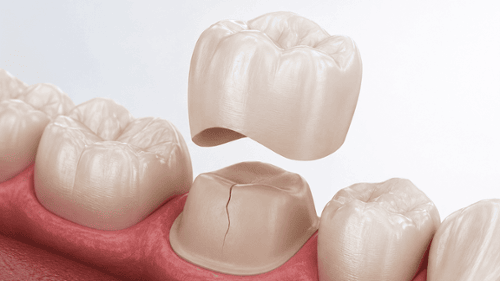
Did you know that the third most common reason teeth need to be extracted is because of cracks? In a recent journal article, our dental colleagues at the University of Queensland published these findings.
A cracked tooth can look normal. It may not hurt. It may not show clearly on an x-ray. It may sit beneath an old filling where it cannot be seen during a routine visual examination.
That does not mean every cracked tooth will be lost. Many can be protected and retained, especially when the problem is found before the tooth splits or the crack extends deeply below the gum.
The difficulty is that cracked teeth do not always give a clear warning.
The recent study found that:
- 55% of cracked teeth had no symptoms
- 55% were hidden beneath existing restorations
- More than half had a negative bite test
In other words, a tooth can feel fine, respond normally to testing and still be cracked.
What You Might Notice
Some cracked teeth are obvious. Others may be frustratingly vague.
Common signs include:
- Sharp pain when biting
- Pain as you release your bite
- Sensitivity to cold
- Discomfort around an old filling
- Pain that comes and goes
- Difficulty working out which tooth is causing the problem
- A tooth that simply feels 'different'
And sometimes there are no symptoms at all.
Why Do Back Teeth Crack?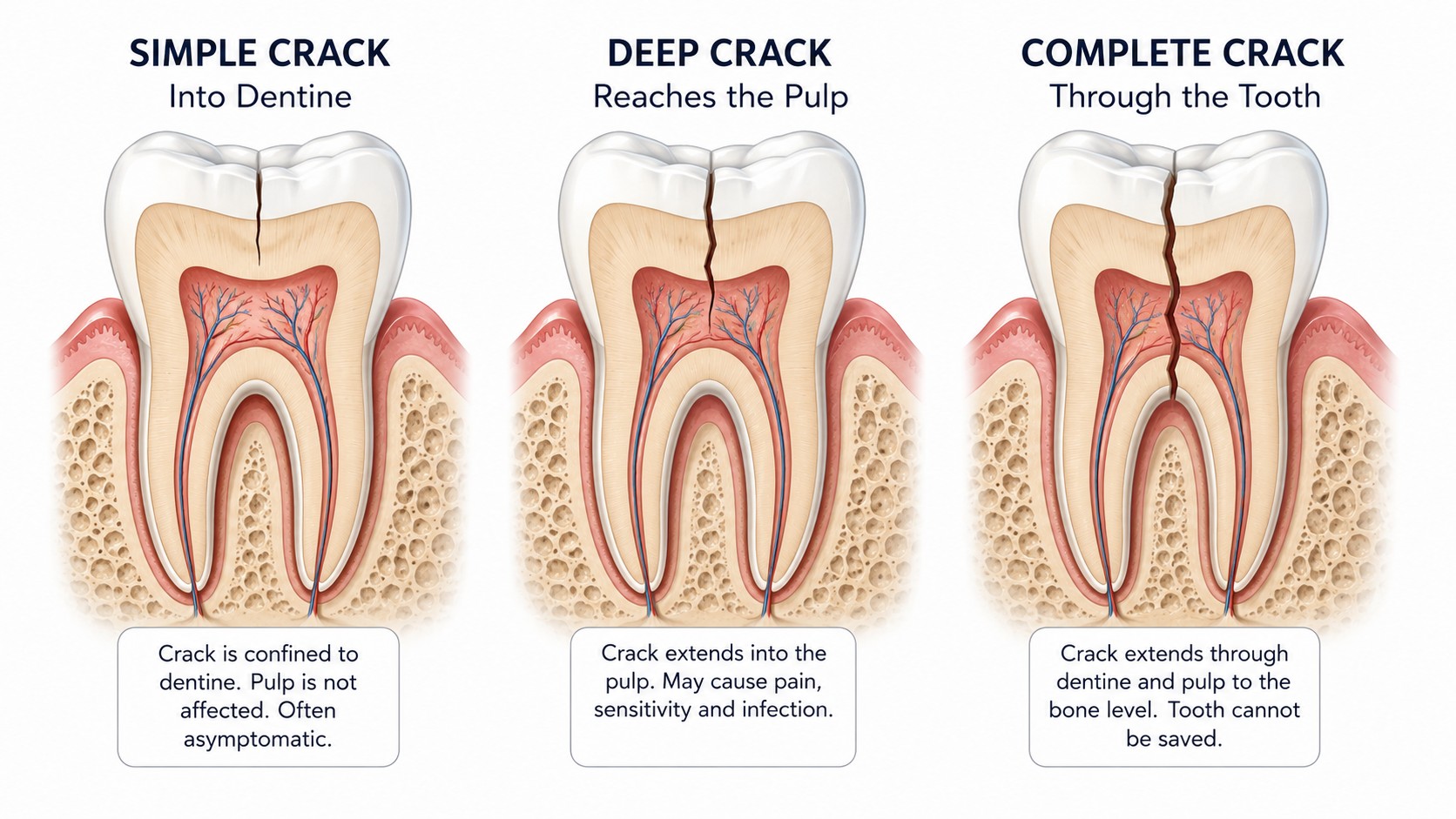
Molars carry the heaviest chewing loads, particularly teeth with large or ageing fillings.
Risk can increase with:
- Grinding or clenching
- Repeated heavy biting
- Large restorations
- Weakened tooth structure
- Chewing ice or hard foods
- Uneven biting forces
- Normal changes within the tooth due to aging
In the Australian study, around 80% of the cracked teeth were molars.
Can We Save a Cracked Tooth?
Often, yes.
Treatment depends on how deep the crack extends, whether the nerve is involved and how much tooth structure remains.
Options may include:
- Monitoring a small stable crack
- Replacing an old filling
- Protecting the tooth with an onlay or crown
- Root canal treatment if the nerve has been damaged
- Extraction if the crack extends too deeply or the tooth has split
A crack cannot heal, but the tooth can often be stabilised.
Why Diagnosis Can Be Difficult
There is no single test that identifies every crack.
A dental x-ray may look normal. A bite test may be negative. Symptoms may come and go. The crack may be hidden beneath a restoration.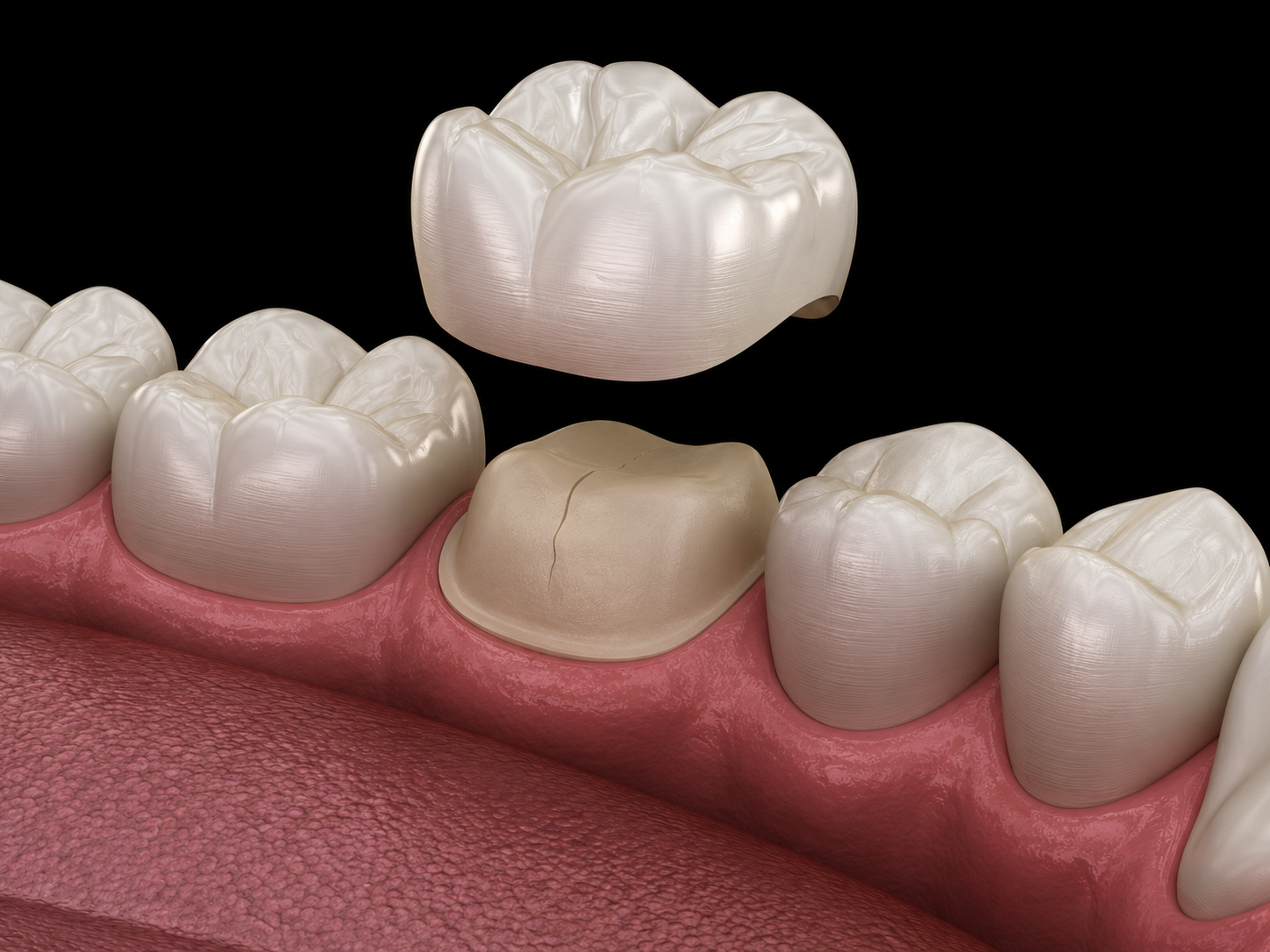
Assessment may involve magnification, cold testing, bite testing, transillumination, periodontal probing, x-rays and clinical photographs.
Sometimes the full extent of the crack only becomes visible after an old restoration is removed.
Do Not Wait for Severe Pain
Severe pain is not always the first sign. Sometimes it is the point at which the crack has already reached the nerve or progressed further into the tooth.
Arrange an assessment if you notice:
- Intermittent pain when chewing
- Unexplained cold sensitivity
- Discomfort around an old filling
- Pain when releasing your bite
- A broken cusp or piece of tooth
Finding a Crack Early May Give Us More Options
Many cracked teeth can still be saved, but timing matters.
At Edward St Dental, we use magnification, digital imaging and clinical photography to investigate suspicious teeth and show you what we find.
Concerned about biting pain, cold sensitivity or an ageing filling? We invite you to book an assessment with Edward Street Dental in Brisbane CBD.
Written and clinically reviewed by Dr Malcolm Campbell, Dentist, Edward Street Dental, July 2026
Read more here: Renner P, Krishnan U, Moule A, Swain M. Characteristics of cracks in posterior teeth and factors associated with symptoms: a cross-sectional practice-based observational study. Australian Dental Journal. 2025;70:181–189. doi:10.1111/adj.13075