
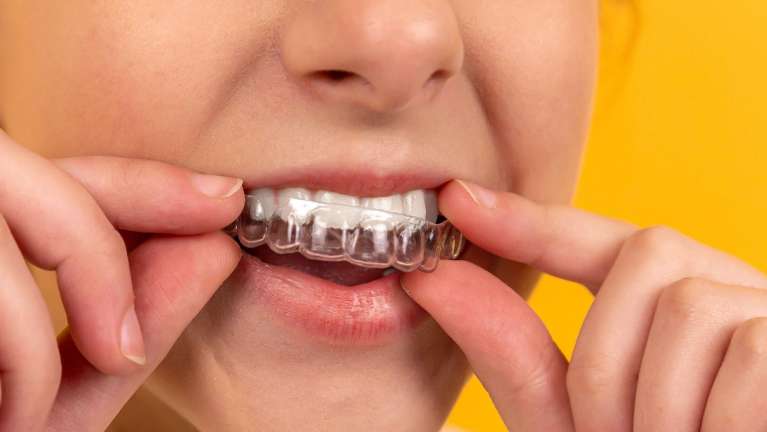
Do you ever look in the mirror and wish your teeth were straighter or better aligned? Many people feel the same way, and today, there are more options than ever to improve tooth position discreetly. The team at Edward St Dental offers Invisalign clear aligners as one potential treatment option for suitable patients. While many people associate Invisalign® with cosmetic straightening, it can also be used to address a variety of alignment and bite concerns.
What Is Invisalign?
Invisalign clear aligners are custom-made orthodontic trays designed to gently move teeth into a planned position over time. Each set of aligners is worn for a prescribed period before switching to the next stage in the sequence. Because Invisalign trays are clear and removable for eating, drinking, brushing and flossing, many patients find them convenient and easy to manage. Treatment time and results vary based on individual needs.
Who Is a Candidate for Invisalign?
Adults and teens with mild to moderate alignment or bite concerns may be suitable candidates. Your dentist will perform a full assessment to determine whether Invisalign clear aligners are appropriate for your situation.
8 Issues Invisalign May Help Address
Below are eight common concerns that Invisalign may be able to improve, depending on your individual case.
1. Straightening Crooked Teeth
Crooked or misaligned teeth can affect both appearance and daily function. Invisalign may help guide teeth into a straighter position for improved overall alignment.
2. Fixing Crowded Teeth
Crowding occurs when there isn't enough space in the jaw for all teeth to sit comfortably. This can make cleaning more difficult and increase plaque buildup. Invisalign may be used for certain levels of crowding, depending on severity.
3. Closing Gaps Between Teeth
Spacing issues can also trap food and contribute to plaque accumulation. For appropriate cases, Invisalign may help reduce or close these gaps over time.
4. Addressing Rotated or Turned Teeth
Mildly rotated teeth can often be guided into a more ideal position using clear aligners. Your dentist can assess whether your specific rotation is suitable for treatment.
5. Improving an Open Bite
An open bite is when the top and bottom teeth do not make contact when the mouth is fully closed. This can affect chewing and speech. In some cases, Invisalign may help bring the teeth into better alignment to encourage proper contact. Your dentist will assess your bite to determine if clear aligners are a suitable option.
6. Addressing an Overbite
In an overbite, the upper teeth extend too far over the lower teeth. Some overbites can be improved with Invisalign, depending on the individual's anatomy and bite.
7. Improving an Underbite
An overbite happens when the upper front teeth extend noticeably over the lower front teeth. Depending on the individual’s bite and overall dental structure, Invisalign may assist in guiding the teeth toward a more balanced alignment. A full clinical assessment is needed to confirm whether this approach is appropriate.
8. Correcting a Crossbite
A crossbite occurs when one or more upper teeth bite inside the lower teeth. If left untreated, this can contribute to wear, chipping, or gum recession. Invisalign may assist in some types of crossbite correction.
Relief from Teeth Grinding and Abnormal Wear
Some patients with alignment issues also experience teeth grinding or uneven tooth wear. In certain cases, improving alignment with Invisalign may help create a more balanced bite, reducing strain on specific teeth. Your dentist will evaluate whether this is appropriate for your individual concerns and may also discuss other management options if needed.
Issues Invisalign Cannot Address
Certain dental concerns may not be suitable for Invisalign. These may include:
- Altering tooth shape
- Severe spacing issues
- Significant intrusion or extrusion
- Complex midline movements
- Some cases involving existing dental work
Your dentist will recommend alternative treatment options if Invisalign is not the most suitable approach.
Is Invisalign a Clear Solution for Common Bite and Alignment Issues?
Invisalign clear aligners can offer a discreet way to address a range of bite and alignment concerns. For suitable candidates, the system uses a series of custom-made trays designed to gradually guide teeth into a planned position. Your Brisbane dentist will assess your individual needs to determine whether Invisalign may be an appropriate option for improving overall alignment and function.
Interested in Invisalign in Brisbane, QLD?
If you'd like to learn more about Invisalign clear aligners or explore whether they may be suitable for your needs, the team at Edward St Dental can provide a personalised assessment. We invite you to please get in touch with our practice on (07) 3221 5855 for further information or to arrange an appointment.